Why Greenwood Village's Newest Neighborhood Took Eighteen Years to Break Ground
August 20, 2026
August 20, 2026
For eighteen years, a thirteen-acre field sat empty next to one of the busiest entertainment districts in the Denver Tech Center. Shoppers walked past it on their way to Comedy Works. Diners parked near it before dinner at JING. City council members drove by it often enough that one of them eventually called it a blight on the city. Nothing got built.
Then, on a Thursday in June, Century Communities broke ground on ninety detached homes there. Mayor George Lantz showed up for the ceremony. So did the company's regional president, who told the crowd that opportunities like this simply don't come along often in Greenwood Village. He wasn't exaggerating for the cameras. If you are shopping Greenwood Village against other south suburbs and filtering for new construction, the story behind this one parcel tells you something the median price never will: this city has two completely different ways a new home gets built, and only one of them is available to most buyers.
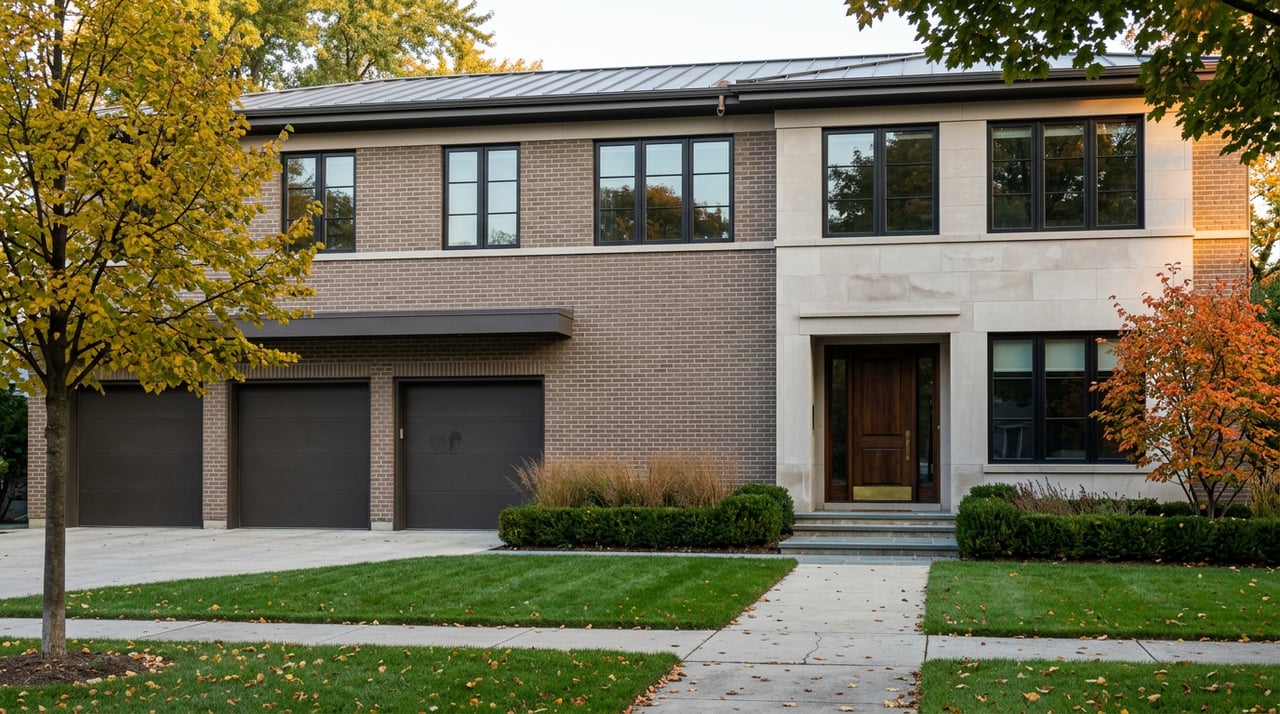
The project is called The Village at Landmark, and it sits on East Berry Avenue directly south of The Landmark's shopping, dining, and theater district, a half mile from the athletic and tennis club Club Greenwood. Century Communities, headquartered in Greenwood Village itself, is building it with architecture firm Godden Sudik. Five floor plans span roughly 3,280 to 4,500 square feet across two home collections, and every unit gets a basement, a three-bay garage, and features you don't see often in this market: private elevators and rooftop living space. Pricing runs $1.7 million to $3 million, with sales expected to open in spring 2027 and model homes under construction later this year.
It is, by every account from the city and the builder, a rare event. The Denver Gazette described it as one of very few single-family home projects to emerge along the south I-25 corridor in the past decade. That framing matters more than the square footage.
The site's history explains why. Before the 2008 crash, the same parcel was headed toward a very different future: a high-density residential concept called the European Village, dreamed up by Landmark's original developer, Zack Davidson, with cobblestone streets and courtyard-style homes inspired by Italian architecture. The financing structure behind it, a metropolitan district set up to fund infrastructure, later became a serious problem. According to Greenwood Village's own account in the mayor's public newsletter, the developer misappropriated funds from that district and was indicted. A second Davidson project planned for the other side of Berry Avenue, a mix of brownstones and courtyard residences, also went into foreclosure around the same time.
The site changed hands the way distressed real estate usually does: slowly. Century Communities bought it from the FDIC in 2016 for $11 million, then spent years working through planning before the city's Comprehensive Plan process cleared the way. Greenwood Village's own account of the era doesn't sugarcoat how it felt to watch from the inside.
"The Landmark bankruptcy was probably one of the saddest things I experienced while on Council."
That's a former mayor, quoted in the city's newsletter, describing the years this corner of Greenwood Village sat as a visible reminder of a deal gone wrong. Council finally approved the ninety-home plan last fall, and by all reports wanted the project to move fast once the paperwork cleared.
Here's the part that matters if you're weighing Greenwood Village against Centennial, Lone Tree, or another south suburb where new subdivisions are a normal part of the market. Greenwood Village's Comprehensive Plan is written to support redevelopment in general, but it also explicitly discourages infill at densities higher than what already exists and prioritizes preserving the city's single-family character. That is not a technicality. It is the reason ninety attached-nothing, gated, single-family homes on one contiguous parcel reads as historic news instead of a routine listing.
Outside of a parcel like Landmark's, which only became buildable because two previous developments collapsed and the land spent years in institutional ownership, new construction in Greenwood Village means something much smaller: one buyer, one lot, one teardown at a time. The city is nearly built out, so almost every "new" home you'll find on the market started as somebody else's 1970s or 1980s ranch.
That path has its own math, and it's worth knowing before you assume a scrape-and-rebuild is a shortcut to new construction at a lower price:
Even the exceptions to the zoning rule tend to prove how tight it is. One recent public hearing involved a legacy lot only 132 feet wide, well under the 150-foot minimum required in that residential district, platted before the city itself incorporated. The owner needed a variance just to build a replacement home on ground that predates the current code. If a lot that old and that established still needs special approval to rebuild, a buyer shouldn't expect a second thirteen-acre exception to appear on the market next year.
If new construction availability is a real factor in how you're comparing Greenwood Village to nearby suburbs, separate the two paths clearly. One is the interest list for The Village at Landmark itself, a genuine, limited opportunity to buy something newly built without managing a construction project, opening in spring 2027 at $1.7 million to $3 million. The other is the default path almost everyone else takes here: buying an older home with a lot that can support a rebuild, then budgeting seven figures and a construction timeline most subdivision buyers never have to think about.
Neither path is wrong. But they answer different questions. If what you actually want is the ease of buying a finished new home off a plan, Landmark is close to the only version of that Greenwood Village will offer for a while. If you're comfortable managing a project and want more control over the final result, the teardown route is the one that's been quietly running here for years, and the cost numbers above are the ones to plan against, not the sticker price of whatever ranch home currently sits on the lot.
Either way, the zoning code that discouraged the European Village two decades ago is the same code shaping your options today. That's not a bureaucratic footnote. It's the actual supply mechanism behind every "new construction" search you'll run in this city.
If you're weighing a scrape-and-rebuild against waiting on Landmark's spring 2027 release, or trying to figure out whether a specific Greenwood Village lot can actually support the home you have in mind, that's a conversation worth having before you write an offer. Maritt Bird works this market closely enough to walk you through both paths side by side, and if you're financing a rebuild with proceeds from a current home, getting a clear read on your equity first makes the whole comparison easier. Reach out to get your instant home valuation and start the conversation from real numbers.
Stay up to date on the latest real estate trends.
Whether you’re navigating the market for the first time or looking to sell with confidence, I’ll bring in-depth local knowledge, proven negotiation skills, and a commitment to making your experience smooth and successful. Contact me today to get started!